Hydraulic Goods Lift – Best For Industrial Use
Moving heavy materials between different floors is a daily challenge in many Indian factories and warehouses. Workers often struggle to carry bulky loads up stairs or use narrow ramps. This manual process is not just slow; it is also very dangerous. One small slip can lead to serious injuries or damaged products. When goods move slowly, the entire production line stops, leading to lost time and lower profits for the business.
Many industrial facilities also face space limitations. Standard elevators are often too small for large machinery or heavy crates, and ramps take up too much floor space. This is where modern technology provides a better way. A hydraulic goods lift is a specialized solution designed to solve these vertical transport problems. It offers a safe, fast, and reliable way to move heavy items, making it an essential tool for any growing industrial plant or logistics hub.
What Is a Hydraulic Goods Lift?
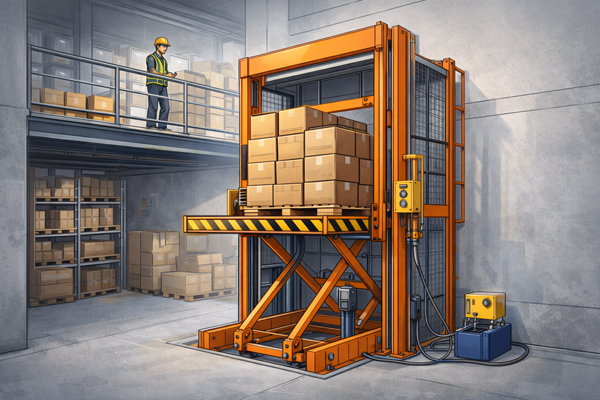
A hydraulic goods lift is a heavy-duty platform designed specifically for moving materials, not people. It uses a hydraulic pump and cylinders to push the lift upward. When the lift needs to go down, a valve slowly releases the fluid, allowing the platform to descend smoothly. These lifts are built to handle much heavier weights than standard passenger elevators.
In a typical factory or warehouse, these lifts are installed to connect different levels, such as a mezzanine floor or a basement storage area. Because they do not always require a deep pit or a large overhead motor room, they are very easy to install in existing industrial buildings.
Common Problems Without a Goods Lift
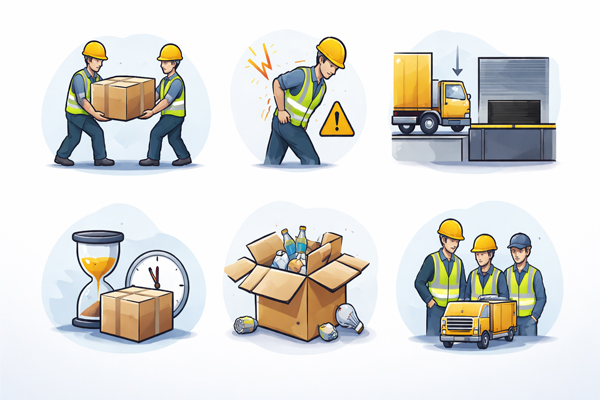
Operating a multi-level facility without a dedicated goods lift creates several bottlenecks. The most obvious problem is manual lifting. Asking workers to carry heavy boxes or equipment manually is a recipe for disaster. It leads to back injuries, fatigue, and long-term health issues for your team, which increases your insurance costs and labor turnover.
Another major issue is the risk of damage. When goods are moved manually or on improper equipment, they are more likely to be dropped or bumped against walls. This leads to expensive product losses. Additionally, relying on manual labor makes your operations slow and inconsistent. If workers are tired or if you are short-staffed, your material movement stops, creating a massive delay in your supply chain.
Key Problems Faced Without Hydraulic Goods Lifts
- High risk of workplace accidents and worker fatigue.
- Slow movement of raw materials and finished goods between floors.
- Frequent damage to expensive products during manual transit.
- Wasted floor space due to long, bulky ramps.
- High dependency on a large number of laborers for simple tasks.
Comparison: Manual Handling vs. Hydraulic Lifts
| Without Hydraulic Goods Lift | With Hydraulic Goods Lift | Business Impact |
| High risk of worker injury | Enhanced safety features | Lower insurance & medical costs |
| Slow, manual transport | Fast vertical movement | Increased daily output |
| High chance of product damage | Smooth and stable lifting | Reduced waste and loss |
| Requires many workers | Can be operated by one person | Significant labor savings |
Key Benefits of Using Hydraulic Goods Lifts
Advantages of Hydraulic Goods Lifts
- Cost-Effective: Lower maintenance costs compared to traction lifts.
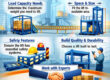
- High Load Capacity: Can easily lift loads from 500kg to over 5,000kg.
- No Machine Room Needed: Saves space at the top of the building.
- Simple Operation: Easy-to-use controls that require minimal training.
- Durability: Built with heavy-duty steel to survive harsh industrial environments.
Industries That Benefit from Hydraulic Goods Lifts
- Manufacturing Units: For moving parts to assembly lines.
- Warehouses: For stacking palletized goods in high-reach areas.
- Pharmaceutical Plants: For safe transport of sensitive chemicals and medicines.
- Logistics Centers: For quick loading and unloading of transport vehicles.
- Engineering Industries: For moving heavy metal components and tools.
How Hydraulic Goods Lifts Improve Productivity
Hydraulic goods lifts transform a chaotic workspace into an organized one. By automating the vertical movement of goods, you eliminate the “human factor” that causes delays. Workers can focus on more important tasks like quality control or packing rather than moving heavy boxes.
Because vertical material handling becomes predictable, managers can schedule production cycles more accurately. There are no more “traffic jams” at the stairs or elevators, leading to a continuous and smooth workflow that directly increases the factory’s total profit.
FAQs
It is used to move heavy materials, pallets, crates, and machinery between different floor levels in an industrial building safely and efficiently.
Yes, they are very safe. They include safety features like emergency stop buttons, overload sensors, and pressure relief valves to prevent accidents.
Most hydraulic goods lifts can carry between 500 kg to 5,000 kg, but they can be custom-built for even heavier loads depending on the facility’s needs.
Any industry with multiple levels or mezzanine floors needs one, especially manufacturing, pharmaceuticals, textiles, and e-commerce logistics.
It speeds up the movement of goods, reduces the number of workers needed for lifting, and prevents delays caused by manual labor fatigue.
Conclusion
Investing in a hydraulic goods lift is one of the smartest moves an industrial business owner can make. It solves the core problems of safety, speed, and space in one go. By switching to professional material handling equipment, you protect your workers, reduce product damage, and ensure your facility operates at peak efficiency. In the competitive world of Indian industry, a goods lift is not just a luxury – it is a necessary tool for long-term success and safety.