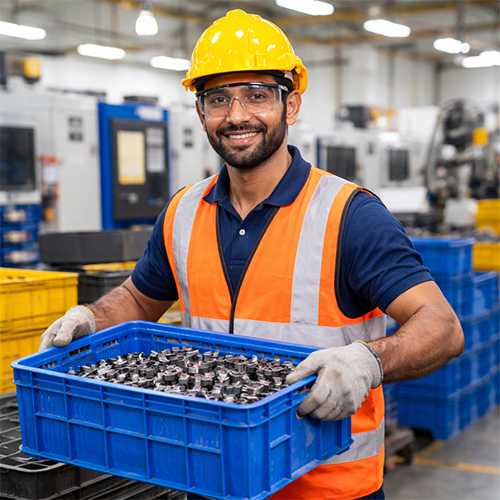
Managing a busy warehouse or factory in India requires a system that keeps goods safe and easy to move. Plastic Crates have become the most reliable tool for businesses looking to organize their inventory without the hassle of traditional boxes. Whether you are running a manufacturing unit in Ahmedabad or a distribution center in Gujarat, these crates provide a clean and sturdy way to store everything from small parts to finished products.
Using the right storage solution prevents unnecessary damage and makes your workspace much safer. In the past, many businesses used wooden or metal boxes, but these often lead to splinters, rust, and heavy lifting issues. Plastic Crates solve these problems by offering a lightweight yet incredibly strong alternative. They help you maximize your floor space and ensure that your goods stay in perfect condition during transport across India.
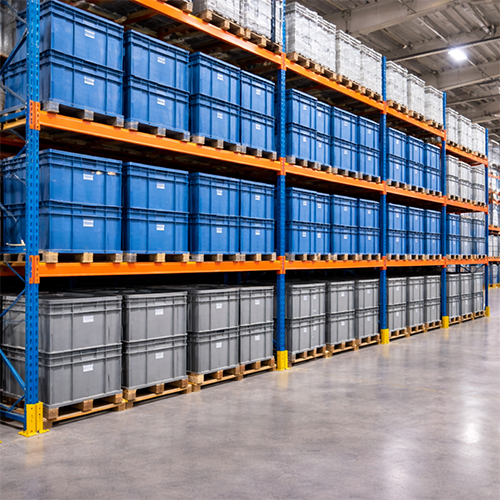
What are Plastic Crates?
Plastic crates are heavy-duty containers designed specifically for industrial storage, handling, and transport. They are made from high-strength plastic that can withstand daily wear and tear in tough environments. Unlike cardboard boxes that tear or wooden crates that rot, these are reusable and very easy to wash. They provide a stable structure for your goods, making them a preferred choice for companies that need a long-term storage solution.
By switching to high-quality crates, you reduce the time workers spend searching for items and moving heavy loads. These crates are designed to fit perfectly into modern industrial workflows, making them an essential part of any efficient supply chain. From food processing to automotive parts, they are the go-to choice for smart storage in today’s fast-growing industrial market.
Problems Faced Without Plastic Crates
- Product Damage: Goods often get crushed or scratched when stored in weak cardboard or rough wooden boxes.
- Wasted Space: Without a proper stacking design, boxes lean or fall, leaving a lot of unused vertical space in the warehouse.
- Heavy Lifting: Metal containers are often too heavy, leading to worker fatigue and slower operations.
- Hygiene Issues: Wood can hold moisture, pests, and mold, which ruins sensitive items like food or medicine.
- High Replacement Costs: Single-use packaging needs to be bought repeatedly, which increases operational expenses.
How Plastic Crates Solve These Problems
- Impact Resistance: The strong walls protect items from getting crushed during stacking or transport.
- Perfect Stacking: They are designed with interlocking bases, allowing you to stack them high and straight without fear of them falling.
- Lightweight Design: Even though they are strong, they are light enough for workers to handle easily, improving speed.
- Easy to Sanitize: Since they are waterproof, you can quickly wash them to maintain a clean environment.
- Long Life: One crate can last for years, which saves you the money you would normally spend on disposable packaging.
Key Features of Plastic Crates
Applications & Industrial Uses
Why Choose a Trusted Manufacturer & Supplier
When looking for a Plastic Crates manufacturer, it is important to find one that understands the Indian industrial climate. A reliable Plastic Crates supplier provides products that can handle the heat and heavy usage common in local factories. By choosing a supplier in Gujarat, you get the benefit of quick delivery and local support. We ensure that our crates meet high quality standards so that your business in Ahmedabad or anywhere in India runs smoothly without equipment failure.
More About Plastic Crates
In the modern Indian market, efficiency is the key to growth. Plastic Crates offer a significant advantage over old-fashioned storage methods like wood or metal. One of the biggest benefits is their stackable nature. In a crowded city like Ahmedabad, warehouse space is expensive. These crates allow you to use your vertical space safely, effectively doubling your storage capacity without needing more floor area.
Worker safety is another major factor. Wooden crates often have nails or splinters that can cause injuries, and metal boxes can have sharp, rusted edges. Plastic is smooth and safe to handle, which reduces workplace accidents. Furthermore, because they are uniform in size, they make inventory counting much faster and more accurate.
From a cost perspective, the initial investment in high-quality crates pays off very quickly. Instead of buying new cardboard boxes every month, you buy these once and use them for hundreds of trips. They are also much easier to maintain; a simple water wash keeps them ready for the next use. As industries in India continue to modernize, using professional-grade crates is no longer a luxury—it is a necessity for staying competitive and organized.