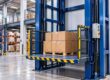
Moving heavy materials in a busy factory can be a major headache. If your workers are struggling to move pallets or heavy machinery between floors, it slows down your production. Choosing the right Hydraulic Goods Lift is the best way to solve this problem. A good lift makes your workflow smoother, keeps your staff safe, and ensures that your products reach the right floor without any damage.
Many factory owners make the mistake of buying the first lift they see. However, every factory has different needs. Whether you are running a small workshop or a massive manufacturing plant, you need a lifting solution that fits your specific space and load requirements. Selecting the wrong equipment can lead to frequent breakdowns, high repair costs, and even workplace accidents.
In this guide, we will help you understand everything about picking the perfect Industrial Hydraulic Goods Lift. We will look at load capacities, safety features, and why working with an expert Hydraulic Goods Lift Manufacturer is the smartest choice for your business. By the end of this article, you will have all the knowledge needed to make a confident buying decision.
Why Factories Need a Hydraulic Goods Lift
Every modern factory needs an efficient way to handle vertical transport. Here is why an Industrial Hydraulic Goods Lift is a “must-have” for your facility:
- Increased Productivity: You can move more goods in less time compared to manual labor or forklifts.
- Worker Safety: It reduces the risk of back injuries and accidents caused by carrying heavy items up stairs.
- Space Saving: These lifts have a compact footprint, allowing you to use your vertical factory space more effectively.
- Cost-Effective: While there is an initial investment, the long-term savings on labor and efficiency are huge.
- Heavy Load Handling: These lifts can easily carry weights ranging from 500 kg to over 5,000 kg.
Hydraulic Goods Lift Safety Features You Must Check
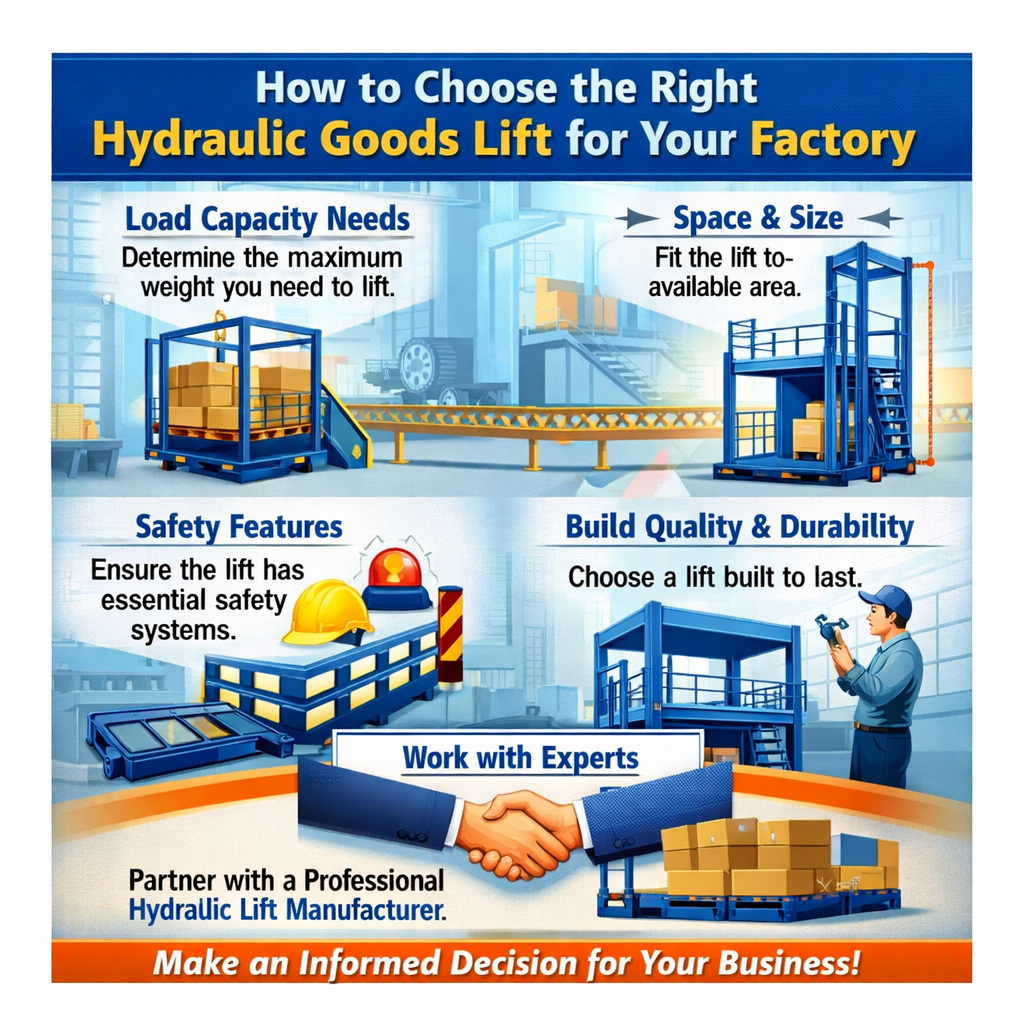
Safety is the most important part of any Industrial Hydraulic Goods Lift. Here is a checklist of features you should ask your supplier about:
- Mechanical Stoppers: These ensure the lift stops exactly at the floor level.
- Collapsible Gates: Strong gates that prevent items from falling out during travel.
- Limit Switches: Sensors that stop the motor automatically when the lift reaches the top or bottom.
- Pressure Relief Valve: Prevents the hydraulic system from building up too much pressure.
- Non-Skid Flooring: The platform should have a chequered plate surface so workers and goods don’t slip.
Expert Tip: Always ask for a “Load Test Certificate” from your manufacturer before the lift starts operation. This proves the lift can safely handle the promised weight.
Types of Hydraulic Goods Lift Used in Industry
| Lift Type | Best For | Max Load Capacity | Installation Needs |
|---|---|---|---|
| Single Mast Lift | Small spaces & light loads | Up to 1 Ton | Small footprint, easy install |
| Dual Mast Lift | Large platforms & heavy loads | Up to 3 Tons | Needs more side space |
| Scissor Goods Lift | Low height lifting | Up to 10 Tons | No wall support needed |
| Cage Type Lift | Loose items or boxes | Up to 5 Tons | Requires a safety cage |
Industries Using Hydraulic Goods Lift
Almost every sector that handles physical products uses a Hydraulic Goods Lift.
- Manufacturing: Moving raw steel, plastic granules, or heavy parts to assembly lines.
- Warehousing: Stacking pallets in multi-level storage systems.
- Automobile: Shifting heavy car engines, tires, and metal frames.
- Logistics: Speeding up the movement of courier parcels between sorting levels.
- Pharma: Moving sensitive chemicals and bulk packaging in a clean environment.
- Food Industry: Transporting bulk ingredients like flour sacks or crates of bottled drinks.
Common Mistakes While Choosing Hydraulic Goods Lift
Avoid these common traps when buying your equipment:
- Buying Based on Price Alone: Cheap lifts often use low-quality seals that leak oil within months.
- Ignoring the Speed: While goods lifts are slower than passenger lifts, if your factory is very busy, a lift that is too slow will create a bottleneck.
- Not Checking Local Regulations: Ensure the lift meets the safety standards of your local industrial department.
- Choosing the Wrong Platform Size: If the platform is too small, you won’t be able to fit your standard pallets, making the lift useless.
Hydraulic Goods Lift vs. Traditional Elevator
| Feature | Hydraulic Goods Lift | Traditional Traction Elevator |
|---|---|---|
| Cost | Much more affordable | Very expensive |
| Maintenance | Low & easy | High & requires specialists |
| Load Strength | Designed for heavy bulk | Designed for light people/bags |
| Pit Depth | Shallow pit required | Deep pit required |
| Machine Room | No separate room needed | Needs a room on top |
Why Choose a Hydraulic Goods Lift Manufacturer in Ahmedabad?
If you are looking for high-quality engineering, choosing a Hydraulic Goods Lift Manufacturer in Ahmedabad is a smart move. Ahmedabad is a major industrial hub known for:
- Engineering Excellence: The city has a long history of making heavy machinery.
- Cost Advantage: Due to the large number of manufacturers, you get competitive pricing without losing quality.
- Service & Support: Manufacturers in this region have ready access to spare parts like pumps, seals, and valves.
- Customization: Local experts in Ahmedabad are famous for building custom lifts that fit into tight or unusual factory spaces.
Maintenance Tips for Long Life Hydraulic Goods Lift
To keep your Hydraulic Goods Lift running smoothly for decades, follow these simple tips:
- Check Oil Levels: Ensure the hydraulic oil is at the right level and is clean.
- Grease the Rails: Keep the guide rails lubricated so the lift moves without friction or noise.
- Inspect Seals: Look for any oil leaks around the cylinder. If you see a leak, fix it immediately.
- Check Electrical Wires: Make sure no wires are loose or damaged by rodents.
- Professional Service: Have a technician visit at least once every three months for a full check-up.
Conclusion
Choosing the right Hydraulic Goods Lift is about more than just moving boxes. It is about making your factory safer and more efficient. By focusing on load capacity, safety features, and choosing a reliable Hydraulic Goods Lift Supplier, you protect your investment and your employees.
Remember, a lift is a long-term partner in your production process. Take the time to measure your space, define your needs, and work with a manufacturer who understands industrial demands.
Pro Tip Box
Always verify the thickness of the steel used for the platform. For heavy industrial use, a platform with a 5mm or 6mm chequered plate is much better than thin sheets that might bend over time.
Buyer Checklist for Factory Goods Lift
- Maximum load weight calculated?
- Platform dimensions confirmed?
- Total travel height measured?
- Pit depth and overhead clearance checked?
- 3-Phase power supply available?
- All safety valves and limit switches included?
- Warranty and AMC (Annual Maintenance Contract) discussed?
Frequently Asked Questions (FAQs)
1. What is the average price of a Hydraulic Goods Lift?
The price depends on the weight capacity and height. Generally, a standard 1-ton lift starts around ₹1.5 Lakh to ₹3 Lakh, but custom features can change this.
2. How much weight can an Industrial Hydraulic Goods Lift carry?
Standard models carry between 500 kg and 5,000 kg. However, some manufacturers can build custom lifts that carry up to 10,000 kg or more.
3. Does a goods lift require a lot of maintenance?
No. Compared to electric traction lifts, hydraulic lifts have fewer moving parts. Monthly lubrication and an oil check every six months are usually enough.
4. Can I install a lift if I don't have a pit?
Yes! You can choose a “Pit-less” design. The manufacturer will provide a small metal ramp so you can roll trolleys onto the platform.
5. Why should I buy from a Hydraulic Goods Lift Manufacturer in Ahmedabad?
Ahmedabad manufacturers offer high-quality steel, advanced hydraulic technology, and very reliable after-sales service at better prices than many other cities.
6. Is a license required for a factory goods lift?
In many regions, industrial lifts must be inspected and certified by the Inspector of Factories or a similar government body. Check your local laws.
7. How long does it take to install a Goods Lift for Factory?
A standard installation usually takes 3 to 7 days after the lift components arrive at your site.
8. What happens if the power goes out while the lift is moving?
Hydraulic lifts are very safe during power cuts. Most come with a manual “down valve” that allows you to lower the lift safely to the ground floor without electricity.
9. Can a goods lift also carry passengers?
Industrial goods lifts are designed for cargo. While a worker might stand on it to operate it, they are not intended for general passenger use due to different safety regulations.
10. How do I find a reliable Hydraulic Goods Lift Supplier?
Look for suppliers with at least 5-10 years of experience, positive customer reviews, and a clear warranty policy.