Every factory needs reliable Material Handling Equipment to run smoothly. Whether you are moving heavy boxes, stacking wooden pallets, or loading delivery trucks, the right tools make the hard jobs much easier. In today’s fast-paced industrial world, businesses cannot rely only on manual labor. Instead, they need smart, heavy-duty machines to lift, move, pack, and store goods safely. From the production line to the storage area, this equipment acts as the backbone of any successful manufacturing plant, ensuring that materials keep flowing without any sudden stops.
Choosing the right material handling systems is very important for the daily operations of your factory. When you select the correct machines, you instantly improve workplace safety. Manual lifting often leads to back pains and severe injuries for workers, but machines do the heavy lifting safely. Moreover, having the proper equipment greatly boosts your daily productivity. Your team can transport items much faster and with much less physical effort, allowing your entire facility to complete large customer orders right on time.
A well-planned material handling setup also improves your overall factory workflow. Everything moves in a clean, organized path from the raw material section to the final delivery dock. By carefully picking the best tools for your specific space and products, you eliminate wasted time, reduce accidental product damage, and ultimately increase your business profits.
What is Material Handling Equipment ?
In simple words, material handling equipment refers to the tools, vehicles, and machines used to move, store, control, and protect goods inside a factory or warehouse. Think of it as the transportation system inside your building. Whenever a product needs to be moved from point A to point B, these machines are used to get the job done safely and quickly.
There are many different types of tools used for different jobs. Some are powered by manual effort, while others use electricity or hydraulics to lift massive weights. Some of the most common examples include:
- Hydraulic Goods Lift
- Scissor Lift
- Hydraulic Stackers
- Pallet Trucks
- Drum Handling Equipment
- Dock Ramps
Whether you are looking for simple manual tools or advanced machinery, partnering with a trusted Material Handling Equipment Supplier ensures you get the exact machines needed to handle your factory’s specific goods.
Why Choosing the Right Material Handling Equipment is Important
Selecting the perfect equipment for your factory is not just about buying machines; it is about making a smart investment for your company’s future. Here are the main benefits of making the right choice:
- Improved workplace safety: The right tools prevent workers from carrying loads that are too heavy. This reduces accidents, back injuries, and strain, creating a safer environment for everyone on the floor.
- Faster production workflow: When materials are moved quickly from one station to the next, the entire production process speeds up. There are no bottlenecks or waiting times.
- Reduced labor cost: Machines can do the work of several people in half the time. By using the right equipment, you can move workers to more important tasks, saving money on manual labor costs.
- Better warehouse organization: Equipment like stackers and racks help you use your vertical space. Instead of leaving boxes on the floor, you can stack them high, making your warehouse neat and highly organized.
- Increased efficiency: With the correct machinery, every task takes less effort and time. This high level of efficiency means your business can process more orders and generate more revenue every single day.
Types of Material Handling Equipment Used in Factories
To choose the right equipment, you first need to understand what is available. Here is a detailed look at the most common types of Industrial Material Handling Equipment used in modern factories.
Hydraulic Goods Lift
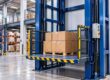
A hydraulic goods lift is a heavy-duty elevator used to move materials between different floors of a building. These lifts are incredibly strong and are powered by hydraulic cylinders. They are widely used in multi-story warehouses and manufacturing plants where heavy raw materials or finished products must be safely moved up and down without using stairs.
Scissor Lift Tables
Scissor lift tables feature a crisscross folding support mechanism that raises and lowers a flat platform. They are mostly used to lift heavy items to an ergonomic working height. For example, workers packing heavy boxes can use a scissor lift to keep the box at waist level, preventing them from having to bend over continuously.
Hydraulic Hand Pallet Trucks
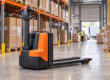
A hand pallet truck, often called a pallet jack, is the most common tool found in any factory. It is designed to slide under a wooden or plastic pallet, lift it slightly off the ground using a hydraulic pump, and move it across the floor. They are highly useful for horizontal movement in shipping areas, warehouses, and shop floors.
Drum Handling Equipment
Many industries use liquids stored in heavy steel or plastic drums. Drum handling equipment includes special trolleys, lifters, and tilt machines designed to grab, lift, and pour drums safely. These tools are absolutely essential in chemical plants, food processing factories, and oil refineries where spilling a drum could be very dangerous.
Dock Ramps
A dock ramp (or dock leveler) acts as a bridge between the factory floor and the delivery truck. Trucks come in different heights, so the dock ramp adjusts to meet the back of the truck perfectly. This allows pallet trucks and forklifts to drive right into the truck to load or unload goods quickly and safely.
Warehouse Storage Racks
While not a machine, storage racks are a critical part of Warehouse Material Handling Equipment. Heavy-duty steel racks allow factories to store materials in vertical columns. Good racking systems are designed to hold massive amounts of weight and provide easy access to goods so that stackers and lifts can place and remove pallets safely.
Factors to Consider When Choosing Material Handling Equipment
Buying industrial equipment is a big decision. To make sure you buy exactly what your factory needs, carefully consider these important factors:
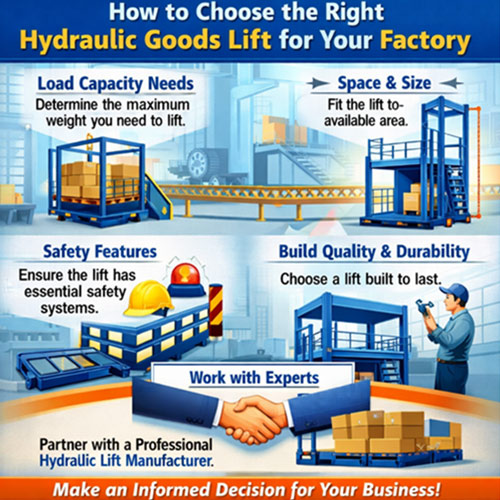
- Load capacity: How heavy are the items you need to lift? Always check the maximum weight limit of the equipment. Buying a machine that cannot handle your heaviest loads will lead to breakdowns and severe safety hazards.
- Lift height: If you are buying a stacker or a goods lift, measure the highest point you need to reach. Ensure the equipment can comfortably and safely lift materials to your highest storage racks or top floors.
- Available floor space: Look at the aisles and doorways in your factory. If you have narrow aisles, you will need compact equipment. Large machines will get stuck or bump into racks if there is not enough room to turn around.
- Type of goods handled: Are you moving standard square boxes, liquid drums, or long steel pipes? The shape and nature of your materials will dictate whether you need standard pallet trucks, drum lifters, or customized carrying tools.
- Frequency of use: Will the machine be used once a day or 24 hours a day? For continuous, heavy-duty use, you must invest in premium, motorized equipment. For rare use, manual hydraulic tools might be enough.
- Safety features: Always look for equipment with built-in safety features like emergency stop buttons, overload protection valves, anti-slip platforms, and safety guardrails. Never compromise on the safety of your workers.
- Maintenance requirements: All machines need care. Consider how easy it is to find spare parts and mechanics. Choose equipment that is easy to grease, clean, and repair to keep your downtime as low as possible.
- Budget and investment: Set a clear budget, but remember that cheap equipment often costs more in the long run due to frequent repairs. Balance your budget with the quality and lifespan of the machinery.
Table: Comparison of Material Handling Equipment
To help you make a quick decision, here is a comparison table of the most common equipment:
| Equipment Type | Use | Load Capacity | Best Industry |
| Hydraulic Goods Lift | Vertical lifting between floors | Heavy (1000kg to 5000kg+) | Manufacturing & Large Warehouses |
| Pallet Truck | Horizontal movement on floors | Medium to Heavy (up to 3000kg) | Warehouse & Retail |
| Hydraulic Stacker | Pallet stacking on shelves | Medium (500kg to 2000kg) | Logistics & Storage |
| Scissor Lift Table | Ergonomic working height adjustment | Heavy (500kg to 4000kg) | Production Lines & Assembly |
| Drum Handler | Lifting and pouring liquid drums | Light to Medium (up to 500kg) | Chemical & Food Processing |
| Dock Ramps | Bridging gap to delivery trucks | Heavy (up to 10,000kg) | Shipping & Logistics |
Benefits of Using Modern Material Handling Equipment in Factories
Upgrading to modern machinery provides massive advantages over older, outdated manual systems.
How Material Handling Equipment Improves Factory Efficiency
Different industries have different challenges, but proper material handling solves them all. Here are real industrial examples of how efficiency is improved:
- Pharmaceutical: Medicine factories must remain perfectly clean and organized. Stainless steel pallet trucks and lifters are used to carefully transport delicate chemical ingredients and glass bottles without spilling, ensuring zero contamination.
- Textile: In the textile industry, giant rolls of fabric and heavy bales of cotton need to be moved constantly. Specialized stackers and scissor lifts help workers feed heavy fabric rolls into weaving machines safely and continuously.
- Engineering: Heavy metal parts, engines, and steel sheets are standard in engineering plants. High-capacity goods lifts and heavy-duty scissor lifts are used to easily move these massive steel components between different assembly stations.
- Logistics: Speed is everything in logistics. Hand pallet trucks and dock ramps allow logistics workers to unload a massive 40-foot delivery truck in just minutes, keeping the supply chain moving rapidly.
- Food processing: Food plants handle heavy bags of flour, sugar, and drums of cooking oil. Drum handling equipment allows workers to pour heavy liquids into mixing vats without spilling a drop, saving both time and costly ingredients.
- Warehousing: E-commerce warehouses deal with thousands of boxes daily. Using modern stackers and racks allows them to store boxes vertically up to the ceiling, instantly doubling their usable floor space and making finding products very easy.
Safety Tips for Using Material Handling Equipment
Even the best equipment can be dangerous if used incorrectly. Follow these simple safety tips:
Key Features of Industrial Material Handling Equipment
When browsing for machinery, you will notice that high-quality industrial equipment shares several important features:
First, they have a robust build quality. Industrial tools are made from high-grade, thick steel to withstand daily banging, crashing, and heavy loads. Second, they feature ergonomic designs. Handles are coated in comfortable rubber, and pumping mechanisms are engineered to require very little human force. Third, they use high-quality wheels. Whether nylon, polyurethane, or solid rubber, the wheels are designed to roll smoothly over rough concrete without leaving marks. Finally, they include precision control systems, allowing operators to lower delicate loads slowly and gently to avoid damage.
Future Trends in Material Handling Technology
The world of factory automation is changing rapidly. One major trend is the rise of Automated Guided Vehicles (AGVs), which are robotic pallet trucks that drive themselves around the warehouse using sensors and cameras. Another trend is IoT (Internet of Things) integration, where machines are connected to the internet. This allows factory managers to track the exact location of a lift and monitor its battery or hydraulic health on a computer screen. Lastly, there is a big push towards eco-friendly equipment. Factories are moving away from noisy, polluting diesel machines and switching entirely to clean, quiet, electric, and manual hydraulic solutions to reduce their carbon footprint.
Why Choose a Professional Material Handling Equipment Manufacturer
When it is time to buy, you should always partner with an experienced and professional manufacturer rather than a generic hardware store. A dedicated company understands the complex physics of lifting heavy weights and can guide you to the perfect solution.
Choosing a top Material Handling Equipment Manufacturer in Ahmedabad comes with huge advantages. First, they can offer custom design. If your factory has an unusual layout, they can build a goods lift or scissor table specifically designed to fit your unique space. Second, professional manufacturers strictly follow industrial safety standards, ensuring every weld and hydraulic cylinder is tested for safety before it leaves their workshop.
Furthermore, buying directly from a manufacturer guarantees a long service life for your machines because they use high-quality raw materials. Finally, you get excellent technical support and after-sales service. If your machine ever breaks down, the manufacturer can quickly send expert mechanics and genuine spare parts to fix it, ensuring your factory experiences minimal downtime.
FAQs
Material handling equipment is used to safely lift, move, store, and organize raw materials and finished goods inside a factory. It speeds up the production process, replaces manual heavy lifting, and protects both workers and products from damage.
For general warehouses, Hydraulic Hand Pallet Trucks and Hydraulic Stackers are usually the best choices. Pallet trucks easily move goods horizontally across the floor, while stackers are perfect for lifting heavy pallets vertically onto tall storage racks.
You must consider factors like the maximum load capacity you need to lift, how high you need to reach, the available aisle space in your factory, your budget, and the specific type of goods (like boxes, pallets, or liquid drums) you handle daily.
The most common systems include pallet trucks, hydraulic stackers, scissor lifts, heavy-duty goods lifts, dock levelers, and warehouse racking structures. Most manufacturing plants use a combination of these systems to manage their inventory.
You can buy top-quality machinery from leading manufacturers like Vision Lift India. Purchasing from a dedicated Material Handling Equipment Manufacturer in Ahmedabad ensures you get reliable, heavy-duty products with excellent after-sales support and spare parts availability.
A pallet truck is designed only for horizontal movement; it lifts a pallet just a few inches off the ground to move it across the room. A stacker, on the other hand, is built for vertical lifting and can raise pallets several feet high to place them on storage racks.
Yes, absolutely. Even manual equipment like hand pallet trucks can cause foot injuries or product damage if used carelessly. Basic training ensures workers know how to steer correctly, apply brakes, and read load capacity warning labels.
Industrial material handling machinery should have a quick visual inspection daily. However, a deep maintenance check – including greasing moving parts, checking hydraulic fluid levels, and inspecting wheel bearings – should ideally be performed every three to six months, depending on usage.
Conclusion
Upgrading your factory’s internal logistics is one of the smartest business moves you can make. The right machines do more than just lift boxes; they completely transform how your business operates on a daily basis. By investing in modern equipment, you create a safer environment for your employees, drastically speed up your production lines, and ensure that your warehouse runs like a well-oiled machine. Take the time to evaluate your floor space, load capacities, and daily operations to choose the perfect tools for your unique needs.
If you are ready to boost your factory’s efficiency, it is crucial to partner with experts who understand your industrial requirements. By working with a trusted Material Handling Equipment Manufacturer in Ahmedabad like Vision Lift India, you are guaranteed to receive highly durable, custom-designed machinery backed by reliable support. Equip your factory with the best tools today, and watch your productivity and profits grow for years to come.